
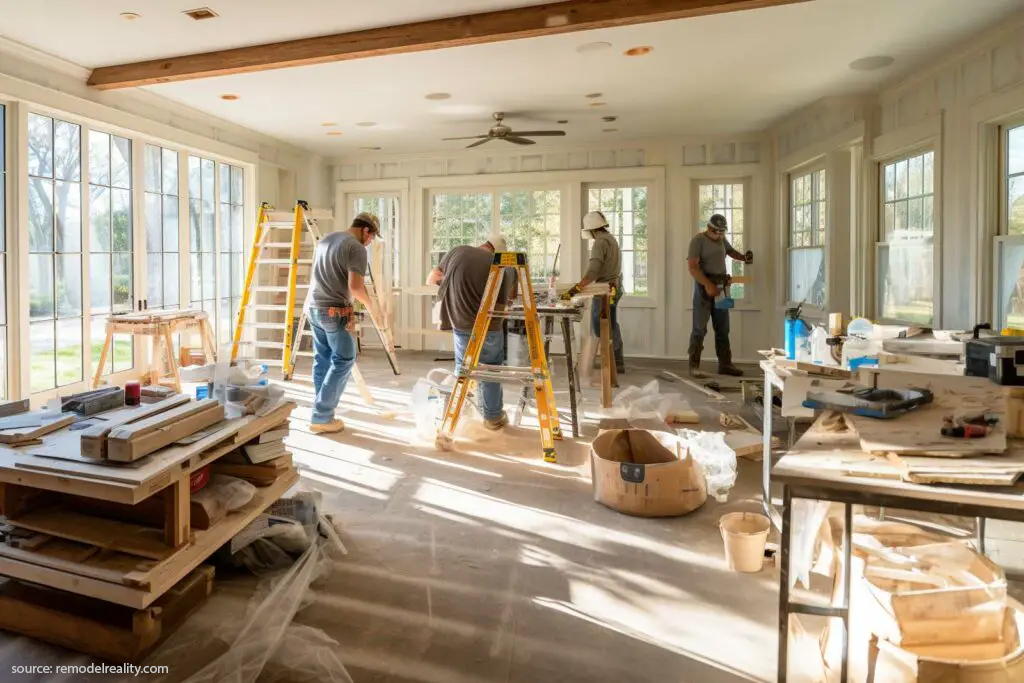
Home renovation and home remodeling are often used to describe the same type of project, but they can involve very different levels of work. Understanding the difference can help homeowners choose the right approach for their property, budget, and goals.
A renovation generally focuses on repairing, updating, or restoring an existing space. Remodeling typically involves changing the structure, layout, or function of a room. Both can improve a home, but the planning, materials, costs, and construction involved can vary significantly.
What Is Home Renovation?
Home renovation usually involves updating or restoring an existing part of a home without making major structural changes.
Common renovation projects include:
- Replacing flooring
- Repainting walls
- Updating cabinets
- Replacing countertops
- Installing new fixtures
- Updating lighting
- Repairing damaged surfaces
- Replacing doors or trim
- Refreshing bathrooms or kitchens
The basic layout and purpose of the space often remain the same.
For example, updating an existing kitchen with new cabinets, countertops, flooring, and fixtures could be considered a renovation if the room’s overall layout stays unchanged.
What Is Home Remodeling?
Home remodeling generally involves making more significant changes to the design, layout, or function of a space.
A remodeling project may include:
- Removing or adding walls
- Changing a room’s layout
- Expanding a kitchen
- Combining two rooms
- Converting unused space
- Reconfiguring bathrooms
- Creating new living areas
- Adding structural features
- Changing how a space is used
For example, turning a closed-off kitchen into an open-concept kitchen and living area would typically involve remodeling because the layout and structure of the home are being changed.
Renovation vs Remodeling: The Main Difference
The simplest distinction is the level of change involved.
Renovation generally improves or restores what is already there.
Remodeling changes the space itself, often altering its layout, structure, or function.
The terms can overlap, however. A larger project may include both renovation and remodeling work. For example, a kitchen remodel may involve moving walls or plumbing while also including renovated cabinets, flooring, paint, and fixtures.
When Does a Home Renovation Make Sense?
Renovation can be a practical option when the existing layout works but the space looks outdated or needs repairs.
Homeowners may choose renovation when they want to:
- Refresh an older interior
- Repair worn or damaged surfaces
- Improve the appearance of a room
- Update fixtures and finishes
- Increase comfort
- Improve functionality without major construction
- Prepare a home for sale
Renovation can sometimes require less construction than a full remodel, particularly when plumbing, electrical systems, walls, and other major components remain in their existing locations.
When Is Remodeling the Better Approach?
Remodeling may make more sense when the existing space no longer meets the homeowner’s needs.
For example, a homeowner may want to remodel when:
- A kitchen has an inefficient layout
- A bathroom lacks usable space
- A bedroom needs to be expanded
- Two rooms would work better as one
- An unused area could become living space
- The home needs a significant functional change
When the problem is the layout itself, simply replacing finishes may not provide the desired result. Remodeling allows the space to be redesigned around how the homeowner wants to use it.
How Renovation and Remodeling Affect the Budget
Project costs depend on many factors, so neither renovation nor remodeling has a fixed price range.
The scope of work can affect the budget through:
- Material selection
- Labor requirements
- Structural changes
- Plumbing work
- Electrical work
- Flooring and finishes
- Permits
- Custom features
- Project size
- Existing property conditions
A renovation that involves high-end materials can cost more than a small remodel, while a simple layout change may be less expensive than an extensive cosmetic renovation.
The best way to understand the potential cost is to define the scope of work and obtain a detailed project estimate.
Remodeling May Involve More Planning
Projects that change walls, plumbing, electrical systems, or other structural elements generally require more planning than straightforward cosmetic updates.
Before construction begins, homeowners may need to consider:
- Design plans
- Structural requirements
- Building codes
- Permits
- Plumbing and electrical changes
- Material availability
- Project scheduling
- Temporary access or living arrangements
Good planning can help identify potential issues before construction begins and create a clearer path for the project.
Renovation Can Still Make a Major Difference
A renovation does not have to involve major structural work to transform a home.
Replacing outdated finishes, improving lighting, updating cabinets, changing flooring, and applying fresh paint can make a room feel significantly different.
Renovation can be particularly useful when the existing layout is already functional and the homeowner wants to improve the appearance or condition of the space without completely redesigning it.
Can a Project Include Both?
Yes. Many home improvement projects combine renovation and remodeling.
Consider a kitchen project where the homeowner wants to remove a wall, relocate plumbing, install new cabinets, replace flooring, update lighting, and repaint the room.
Removing the wall and changing the layout would involve remodeling. Replacing the finishes and updating the surfaces would involve renovation.
Thinking of the project in terms of its individual components can make it easier to understand the full scope.
How to Decide Which Approach You Need
Start by identifying what is not working in the current space.
If the problem is mainly appearance, worn materials, or outdated finishes, renovation may be enough.
If the problem involves the layout, available space, or how the room functions, remodeling may be more appropriate.
It is also useful to consider your long-term goals. A project designed around how you expect to use the home for many years may require a different approach from a simple cosmetic update.
Why Choose CBR Construction?
At CBR Construction, we understand that every home improvement project has different goals and requirements. Our team can help homeowners evaluate the existing space, define the scope of work, and determine what type of construction approach fits the project.
Whether you are updating an existing room or planning a more extensive transformation, careful planning and quality workmanship are important from the beginning.
We focus on understanding the homeowner’s needs and completing construction work with attention to the details that affect the finished result.
Plan Your Home Improvement Project With Confidence
The difference between renovation and remodeling mainly comes down to the type and extent of changes being made. Renovation generally updates or restores an existing space, while remodeling changes its layout, structure, or function.
Understanding this distinction can help you set realistic expectations for your project. Whether your home needs a simple refresh or a complete transformation, defining your goals and scope before construction begins can make the planning process much easier.